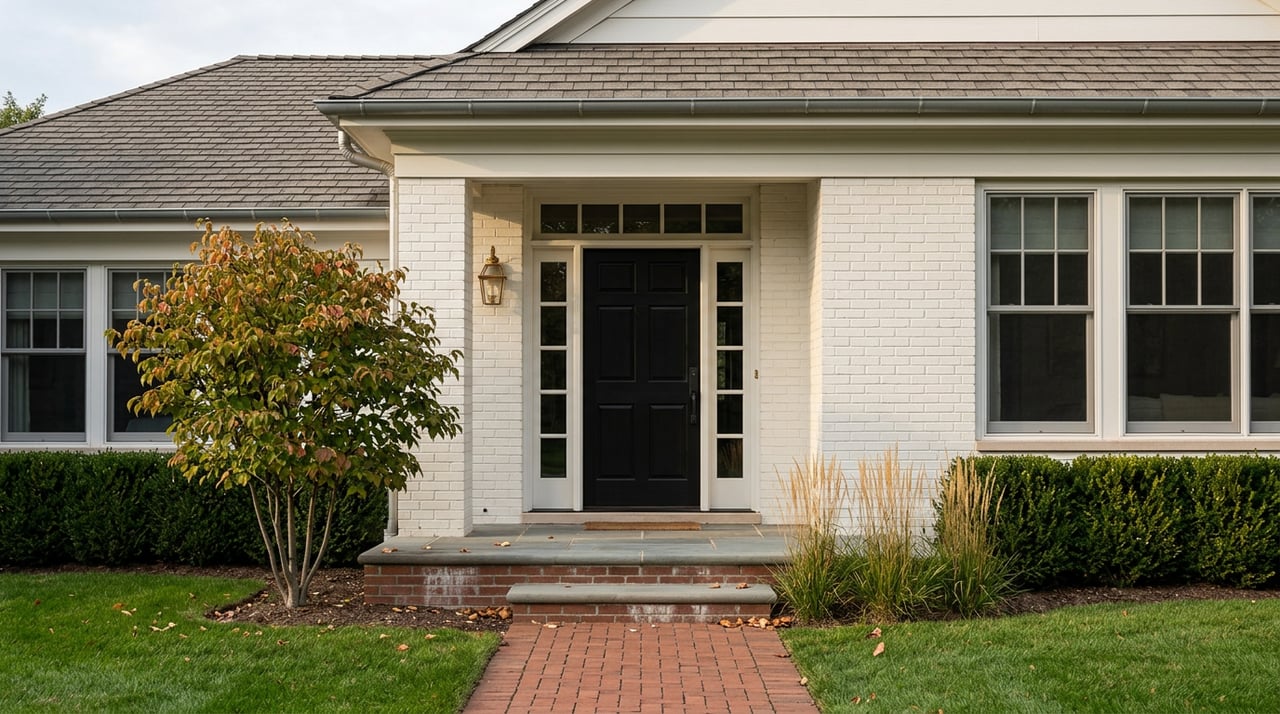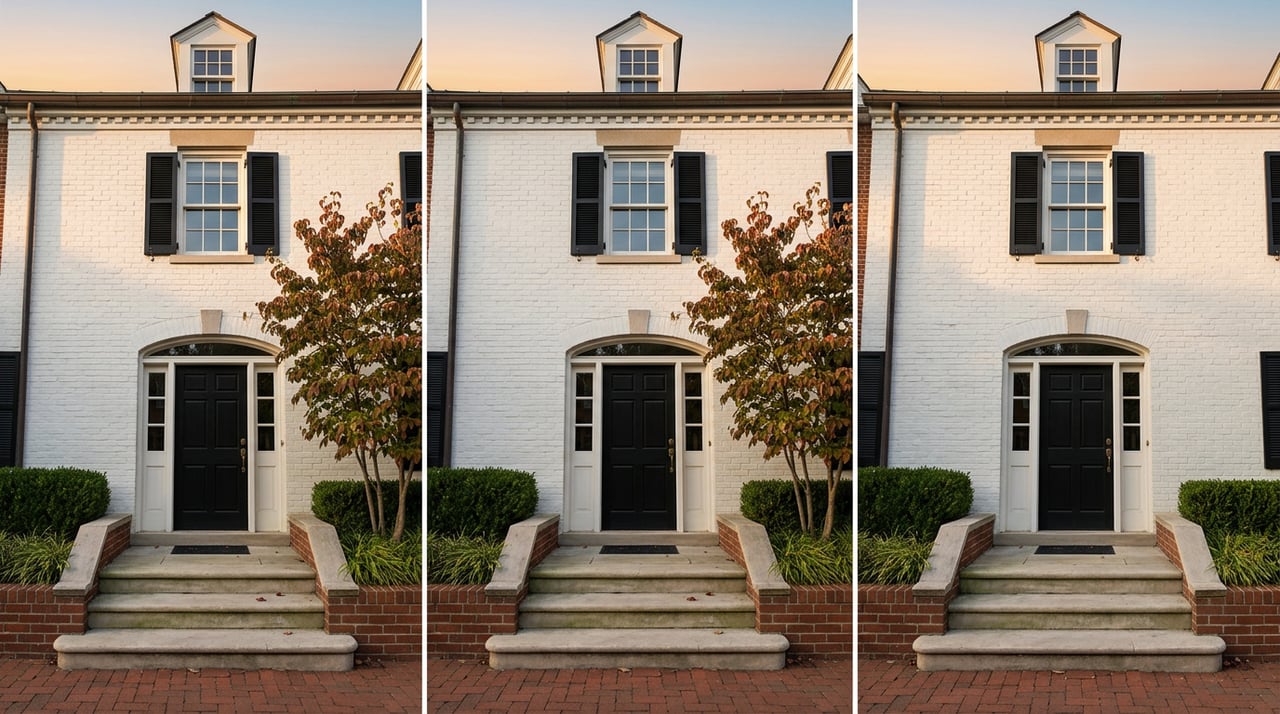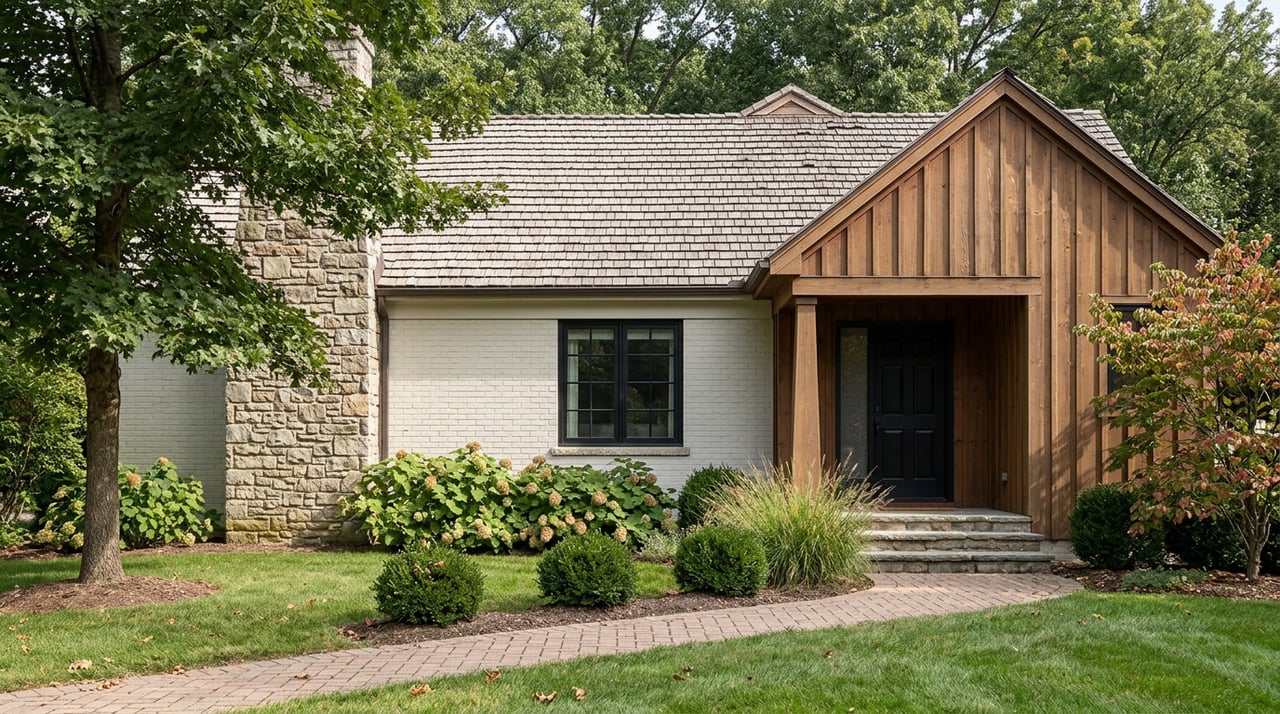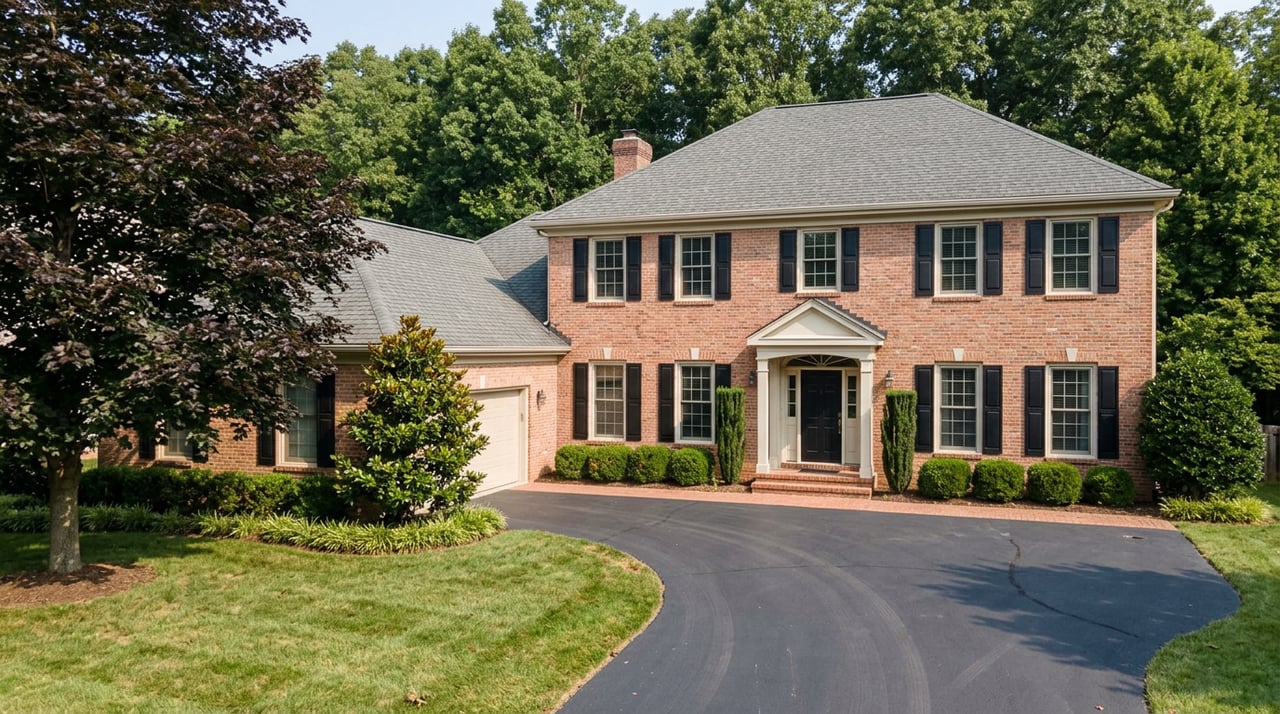
Paint the shutters the wrong shade of yellow in a New Albany subdivision and you are technically out of compliance before the primer is dry. Choose the wrong color of mulch at New Albany Links and the same rule applies: only black, double or triple processed hardwood mulch is pre-approved, and anything else needs a written application first. Neither fact shows up on a listing sheet. Both point to something buyers comparing New Albany against Dublin, Upper Arlington, or Powell tend to miss. The price on the sign is not the product. The product is a house plus a permission structure, and in New Albany that structure is unusually layered, unusually specific, and different depending on which section of the city you buy into.
A city-level code sits under every neighborhood-level code
New Albany's Architectural Review Board is not a single committee that reviews new construction and then steps aside. It runs an Architectural Review Overlay District that covers most of the city, which means its rules apply on top of, not instead of, whatever base zoning already governs a lot. Under the city's code, any major or minor exterior change, an addition, new siding, a repainted door, a rebuilt porch, requires a Certificate of Appropriateness before work starts, issued either by city staff or, when a waiver is involved, by the board itself.
That citywide layer sets a few things that hold true almost everywhere in New Albany:
| Citywide standard | What it means in practice |
|---|---|
| Georgian, Federal, Colonial Revival, or Greek Revival precedent | New builds and major renovations are expected to draw from one of these historical American styles, not contemporary design |
| Four-sided architecture | Every elevation, including the sides and rear a neighbor might see, needs the same level of detail as the front |
| Brick and wood as preferred materials | Vinyl and fiber cement are allowed in some contexts but must be detailed to mimic traditional construction |
| Driveways in black asphalt | Concrete driveways are not part of the city's design guidance |
| Single-bay, setback garage doors | Garages are expected to read as secondary to the house, ideally entered from the side or rear |
None of that is unique to one subdivision. It is written into the Design Guidelines and Requirements the city has adopted by reference into its zoning code, and it explains why New Albany reads as visually consistent from Market Square out to the newer subdivisions on the east side. But the city's layer is the floor, not the ceiling. Above it, individual neighborhoods run their own architectural review committees, and that is where the real variation, and the real friction for a new owner, actually lives.
The same city, several different rulebooks
Buyers often talk about New Albany as if it were one HOA. It is closer to a handful of HOAs, each with its own committee and its own version of strict.
New Albany Country Club, the community built around the club itself, describes its guiding principle plainly: each section was designed to be unique, but the common thread across all of them is Georgian design, and the architectural review committee retains full discretion over what fits. That discretion matters more than it sounds. A committee with full discretion can approve a project a written guideline would technically block, or decline one a written guideline would technically allow.
New Albany Links, a community of roughly 600 single-family homes built alongside the New Albany Links Golf Club, goes further into day-to-day maintenance decisions. Solar panels need architectural review board approval before installation, with specific requirements about placement and screening from neighboring properties and common areas. Mulch color is regulated by name. Landscaping changes that affect grade, planting beds, or retaining walls need pre-approval, and the association reserves the right to judge whether a lawn is being kept up to standard.
North Village, part of The Preserve and built out by M/I Schottenstein Homes starting in 1999, represents an older, more established layer of the same governance model, a reminder that New Albany's design code is not just for the newest construction. It has been shaping renovation choices in some sections for more than two decades.
Hampsted Village's guidelines are the most granular of the group. A homeowner replacing a cracked brick walkway has to match the original brick's color, size, and shape, and any change to the original design needs approval before work starts, not after. The association aims to respond to applications within 30 days. Real estate signage is its own small bureaucracy: approved signs must be the association's specific blue, with white lettering, mounted on a 4x4 white post, centered in the front yard in line with the front door, and no other type of realtor sign is permitted at all.
That last detail is worth sitting with if you are thinking about New Albany as a seller as much as a buyer. The sign in your own yard, during your own listing, is not entirely yours to choose.
Why this matters more than the median price
Recent price snapshots for New Albany do not agree with each other, and the disagreement is itself informative. Zillow's home value index for the city stood at $572,747 as of June 30, 2026, up 4.0 percent from a year earlier, a figure built to smooth out month-to-month swings. For that same month, a separate market report put New Albany's median sale price at $675,000, up roughly 17 percent year over year, with homes closing at 100 percent of list price in a median of 33 days, and the city's top residential sale in June 2026 reaching $3.2 million. Both figures describe June 2026. Neither is wrong. They are measuring different things: a smoothed value index against whatever specific mix of homes actually closed that month. A newer home near The Preserve and an estate priced like that $3.2 million sale can sit inside the same city limits and the same monthly headline, while operating under design codes that differ in how strict, how discretionary, and how procedurally demanding they are.
That is the piece a median price cannot tell a buyer. Two houses at similar price points, one inside New Albany Links and one inside Hampsted Village, may have very different answers to basic questions: can I install solar. Can I choose my own mulch. How long will a deck addition sit in review. The house is the visible part of the transaction. The architectural review committee is the part that keeps showing up for as long as you own the house.
What to check before you write an offer
A few questions are worth asking early, ideally before an offer goes in, not after a renovation gets stuck in review.
Which specific HOA or architectural review committee governs this address, separate from the city's own Architectural Review Board.
Does that committee's guidance require approval for routine repairs and maintenance, or only for structural changes and additions.
What is the typical response time for an application, and is there a documented turnaround like Hampsted Village's 30-day target.
Are there material restrictions, like driveway surface or exterior paint families, that would affect a planned renovation.
If solar, a fence, or a major landscaping change is part of the plan, has that specific improvement been approved in this neighborhood before.
A listing agent or the HOA's own management company can usually answer these directly, and the answers are public information tied to the property, not opinion.
A few common questions
Do these rules apply to interior renovations? The city's Architectural Review Board and the neighborhood-level committees focus on exterior changes, the elements visible from the street or from neighboring lots. Interior work still needs standard city permits and inspections, but it does not typically require a Certificate of Appropriateness the way a new roofline or repainted exterior would.
Does every New Albany neighborhood require this much review? No. The level of detail varies by community. Some HOA guidelines are closer to broad style requirements, while others, like Hampsted Village's, specify brick matching down to color and shape for a walkway repair. Confirming which committee governs a specific address is the only reliable way to know what to expect.
What building code is currently enforced for renovations? Residential construction in New Albany is enforced under the 2019 Residential Code of Ohio, and contractors working in the city are required to register annually, a requirement that as of June 2025 included a $50 annual fee, proof of insurance, and a valid trade license.
If you are weighing New Albany against another Columbus suburb, or trying to understand what a specific section of the city will actually let you do with a house once you own it, that is exactly the kind of groundwork The Anne DeVoe Group works through with buyers before an offer goes in, not after. Schedule a free consultation, and we will walk through the specific HOA, review timeline, and design code that applies to any address you are considering.